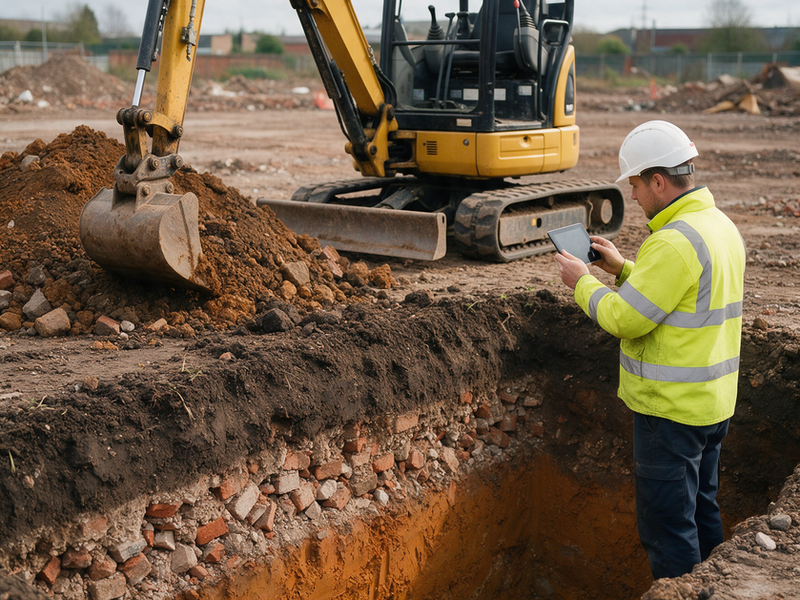
01How a percolation test works.
The method is set out in the guidance to Building Regulations Part H and in BS 6297.
- A trial hole is dug first, at least 1m square and 2m deep, or 1.5m below the proposed pipe level, to check the groundwater.
- A 300mm square test hole is dug to 300mm below the proposed pipe level, filled with water and left to soak away overnight.
- The next day, the hole is refilled and the time for the water to fall from 75% to 25% full (150mm) is measured.
- Vp is that time in seconds divided by 150. The test is run at least three times in at least two holes, and the results averaged.
02What a good result looks like.
The Vp value tells you how quickly the ground drains. Too fast and the effluent is not treated before it reaches groundwater; too slow and the drainage field can flood.
- Part H guidance says a drainage field should only be used where the average Vp is between 12 and 100.
- BS 6297 and the Environment Agency's general binding rules use a minimum of 15.
The result is also used to size the drainage field, together with the number of people it serves. Our guide percolation tests explained goes into more detail.
03Timing matters.
Part H guidance says tests should not be carried out in abnormal weather, such as heavy rain, severe frost or drought. If testing in summer, likely winter groundwater levels need to be considered, and groundwater must not rise to within 1m of the drainage pipe.
A percolation test is not the same as a soakaway test. A
BRE 365 soakaway test is for rainwater and cannot be used to design a foul drainage field, and building control will not accept one in place of the other.
Questions we get asked.
Is a percolation test the same as a soakaway test?
No. A percolation test to Part H and BS 6297 is for septic tank and treatment plant drainage fields. A BRE 365 soakaway test is for rainwater soakaways. Building control will not accept one in place of the other.
What is a good percolation test result?
Part H guidance says drainage fields should only be used where the average Vp is between 12 and 100. BS 6297 and the Environment Agency general binding rules use a minimum of 15.
How long does a percolation test take?
At least two days on site, because the test hole has to soak overnight before the timed tests are run.
Can I do a percolation test myself?
The method is published, but building control and installers usually want results they can rely on, carried out and recorded properly. We can do the testing and give you a clear record of the results.
What if my ground fails?
There are other options, such as a treatment plant discharging to a watercourse with the right consent, or an engineered solution. We can talk you through the results.